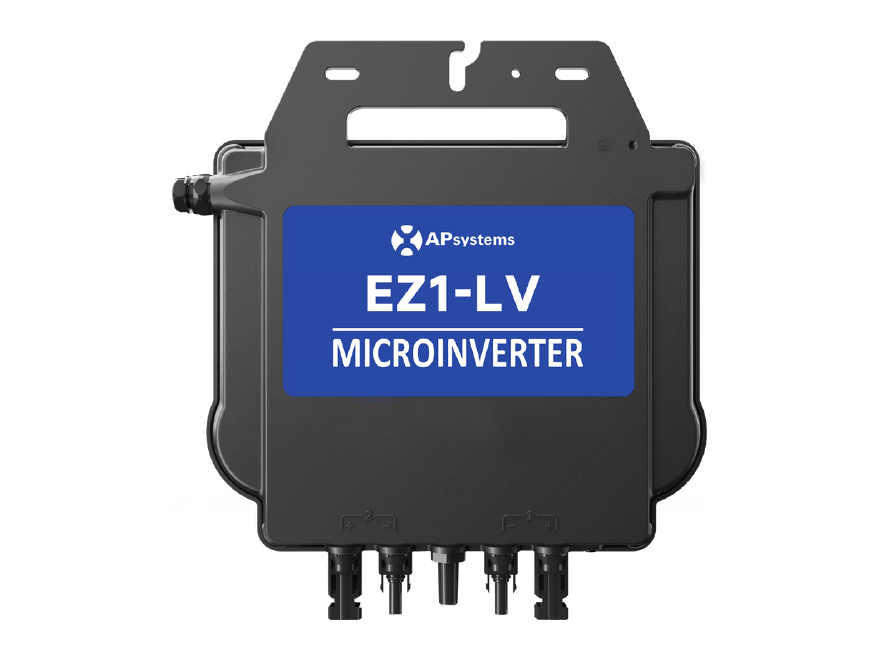

APsystems EZ1-LV Plug-In Solar Kit — Microinverter + APmeter Zero Export
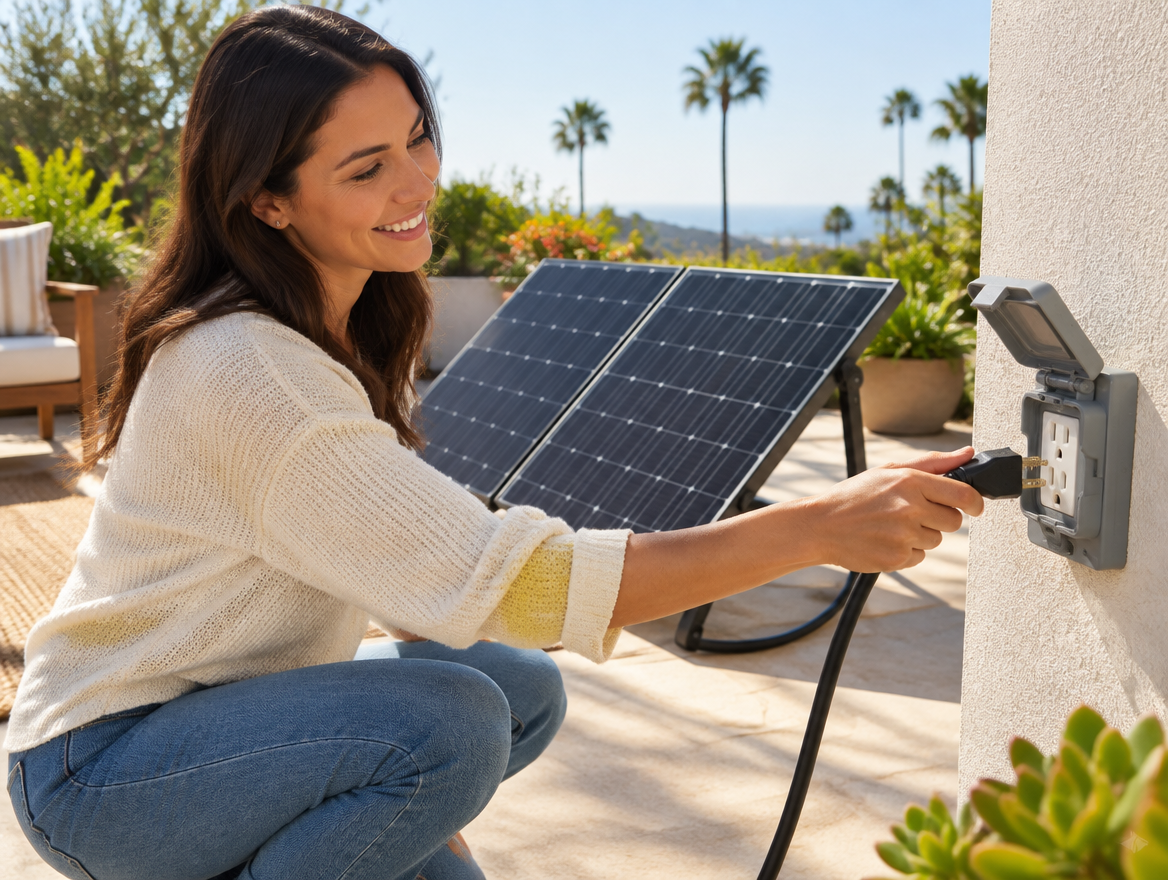
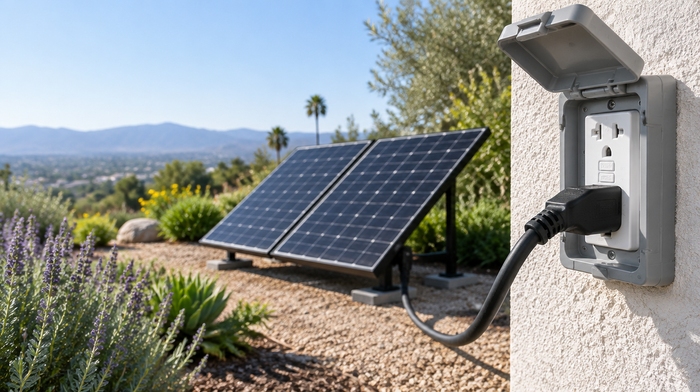
The EZ1-LV microinverter and the APmeter zero-export smart meter in one box. Plugs into a standard outdoor outlet and keeps every watt in your home.
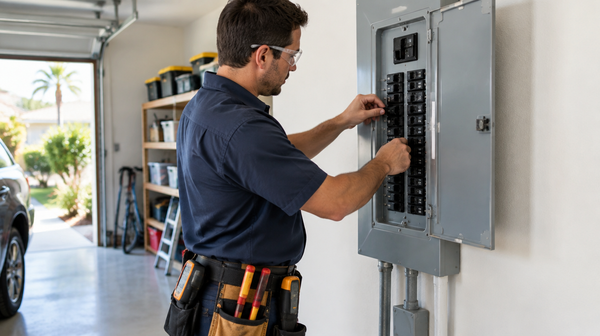
The APmeter is installed at your electrical panel by a licensed electrician. Add an Electrician Visit to your order.
- Local delivery & installation in California
- Licensed electricians available
- Questions? Real answers from our team
- 14-day returns
Plug-in solar, done right
Plug-in solar, supplied the way it actually has to be installed in California. This kit pairs the EZ1-LV microinverter with the APmeter zero-export smart meter, because in this market the two are not separate purchases — a compliant installation requires both. We sell them together so nobody ends up with hardware they cannot legally switch on.

What's in the kit
- EZ1-LV microinverter — 120V North American unit, up to 900W, two PV modules on two independent MPPT channels, 5-metre AC cable to a standard outlet
- APmeter (APM1-W-2) — DIN-rail smart meter with split-core CT rated to 100A, Wi-Fi with external antenna
Running more than two panels? You only need one meter. A single APmeter measures at your service panel and manages every EZ1 on the property, so expanding means adding inverters — not buying another kit. Add an EZ1-LV Add-On Microinverter for each additional pair of panels.
What the smart meter actually does
The APmeter's current transformer clamps around the main conductor at your service panel and reads which way power is flowing, and how much, in real time. It reports that continuously to the EZ1, and the inverter adjusts its output to match.
Draw 900W in the house and the EZ1 is allowed to produce up to 900W. When the fridge compressor stops and household load drops to 200W, the inverter throttles back within seconds. Net flow at your service entrance never goes negative. The system is always feeding your house and never the grid. For a plain-English walkthrough, read how zero-export plug-in solar works today.

Why you would not want to backfeed anyway
The power company doesn't give you free electricity. Why would you give them free electricity?
This is the part most people miss. A plug-in system has no interconnection agreement with the utility — that is precisely what makes it plug-in rather than a permitted rooftop project. And without an interconnection agreement, there is no arrangement under which anyone pays you for what you send out. No credit on the bill. No meter running backwards in your favour. Nothing.
Power pushed onto the grid from a system with no agreement behind it is simply absorbed. You bought the panels. You bought the inverter. You generated the electricity. And it is gone, for free, to a company that has never once handed you a free kilowatt-hour.
Now take that same kilowatt-hour and consume it in your own house. It displaces electricity you would otherwise buy at full retail rate — and California retail rates are among the highest in the country. Every watt the APmeter keeps on your side of the meter is worth exactly what you would have paid for it. Every watt that escapes is worth zero.
So the APmeter is not a compliance tax bolted onto the system. It is the component that makes sure the energy you paid to generate gets spent where it actually has value: on your own load, offsetting your own bill.
What this means in practice
On a bright weekday with nobody home and almost nothing running, the EZ1 will deliberately hold back rather than produce at full tilt. That is the system working correctly, not a fault. It is also generation you had no way to monetise — without an export agreement, that surplus was never going to earn you anything.
The practical takeaway is that plug-in solar pays best in households with a steady daytime baseline: a fridge and freezer, a home office, a pool pump, a heat pump, someone home during the day. The more load you have while the sun is up, the more of your production has somewhere useful to go.

Independent tracking on both inputs
Two modules, two separate maximum power point trackers. No two panels in a real installation see identical light — one catches a balcony rail's shadow, one sits nearer a wall, one collects more dust along its lower edge. Independent MPPT lets each module contribute whatever it can rather than dragging both down to the weaker one.
Commissioning
Everything configures through the AP EasyPower app: pair the inverter over Bluetooth, join it to the house Wi-Fi, pair the meter, set the export limit. Per-panel production data starts flowing immediately. Where wireless coverage is poor at the array, the LTE USB Dongle offers a cellular path instead.

Installation note — read before ordering
The inverter side genuinely is plug-and-play. The meter side is not. The CT installs around the main conductor inside your service panel, which means working in a live load centre. In California that is licensed electrician work. Budget for an electrician on the meter, not on the whole job. Add an Electrician Visit to your order, or read when you need an electrician for dedicated circuits and breakers.

Suited to
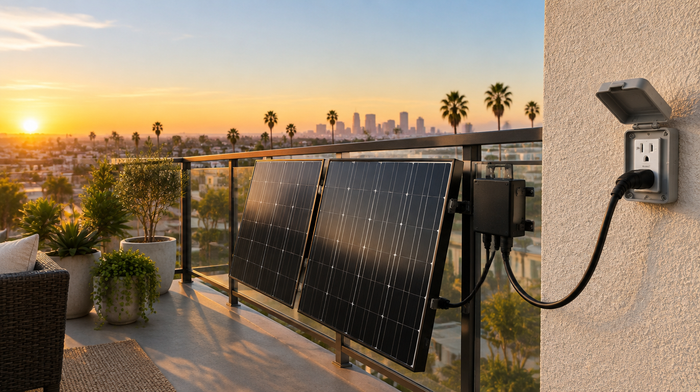
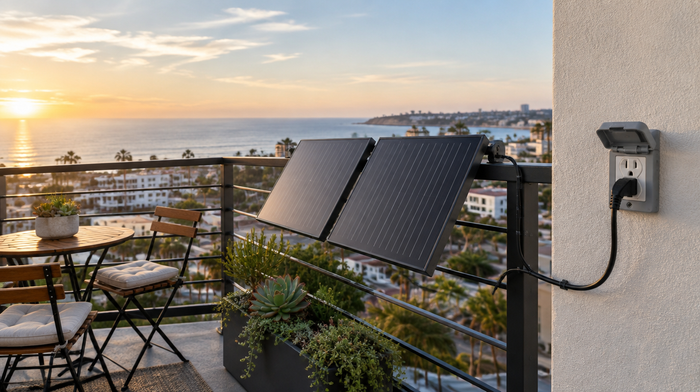
- California balconies, patios, gardens and small ground mounts on 120V circuits
- Renters and condo residents who need a system that moves house with them (see balcony solar for renters)
- Households trimming a bill without committing to a rooftop project
- Workshops, sheds and cabins already served by a standard receptacle
You may also need
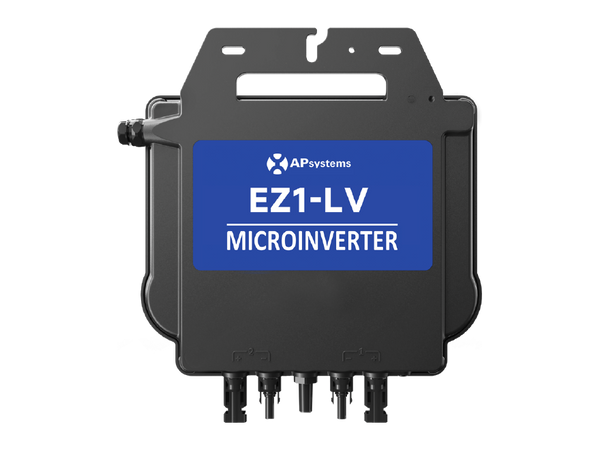
- EZ1-LV Add-On Microinverter — one per additional pair of panels. No second meter required.
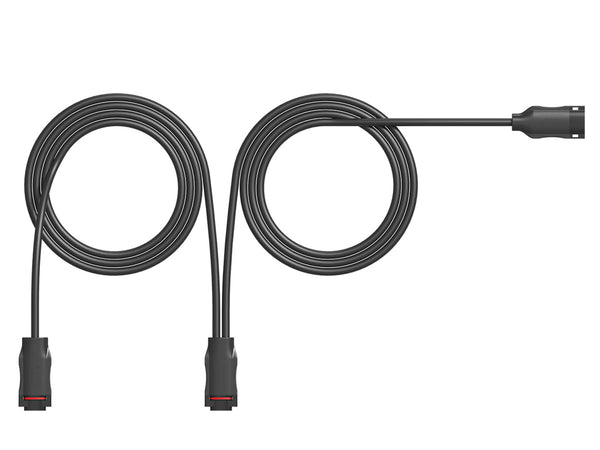
- EZ1 Dual Parallel Bus Cable — to chain multiple EZ1 units onto a single circuit. Available in 2m and 4m.
- DC Extension Cable (MC4) — when the modules sit further from the inverter than the factory leads reach. 1m, 2m, 3m and 4m lengths are coming soon to Cables & Accessories.
- Generator Input Plug + Interlock Kit — plug-in solar shuts off in a blackout; this lets a portable power station run your home's circuits instead.
Local delivery & install
We deliver and install across our California service area.
Licensed electricians
Meter installs, dedicated circuits and breakers. Learn more
Know your savings
Estimate your bill savings with our savings calculator.
Helpful guides
We'll help you plan it
Tell us about your space and your power bill, and we'll recommend the right kit, panels and backup setup for your home.