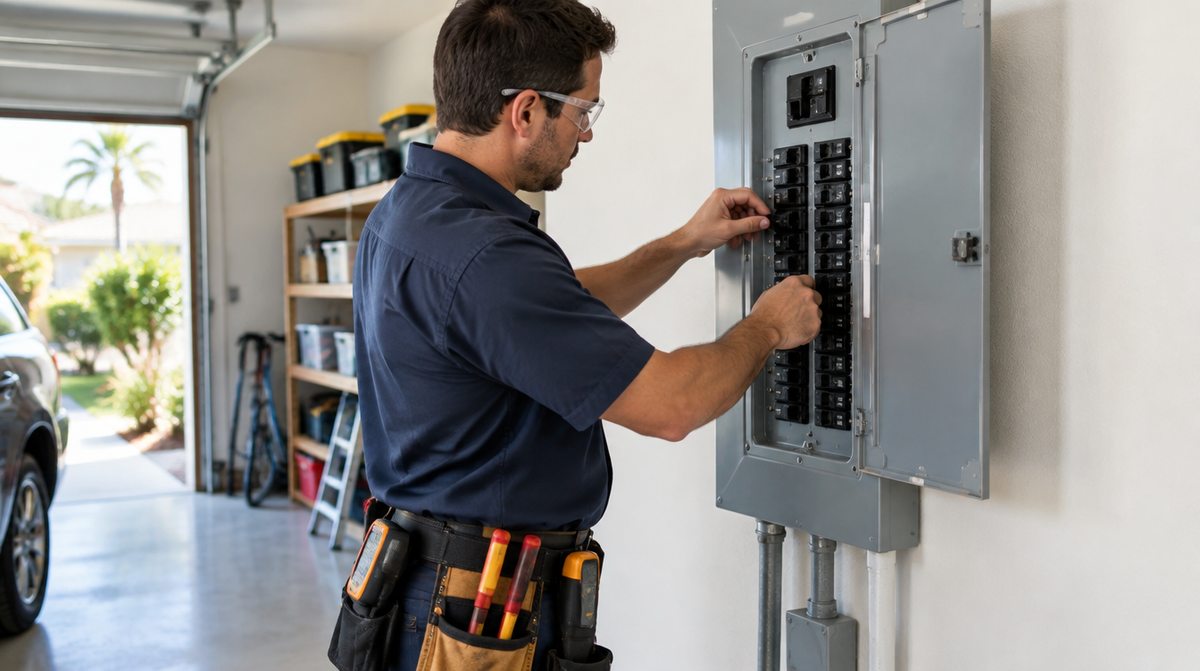
InCharge Solar services
Book an electrician for your plug-in solar
Most single kits plug straight in. But bigger systems and work inside your electrical panel call for a licensed pro. Here's how to know which one you need.
Quick check
Do you need an electrician?
Many customers plug in a single kit and never need one. Bigger systems and anything inside your electrical panel are a different story. Here's how to tell.
You can usually plug in yourself if…
- You're running one microinverter (up to 900 W)
- You have a working outdoor GFCI outlet with a weatherproof cover where your panels will go
- That outlet's circuit doesn't power big appliances like space heaters, microwaves, AC units or power tools
- Your APmeter can be set up without opening your electrical panel
Even with one kit, a dedicated circuit is still the gold standard. It's never a bad idea.
Book an electrician if…
- You're running two microinverters (up to 1,800 W) or planning to expand
- You need a new outdoor outlet near your balcony, patio or yard
- You need a new circuit breaker, or your panel is full
- Your APmeter's sensors need to be installed inside the panel
- Your home has older wiring, breakers that trip often, or outlets that feel warm
Not sure which side you're on? Describe your setup in the booking form and we'll tell you.
The safety reason
Why more solar means you need a dedicated circuit
Your breaker panel was built to protect wires from too much power coming out of the panel. Plug-in solar adds power from the other end of the circuit, where the breaker can't see it.
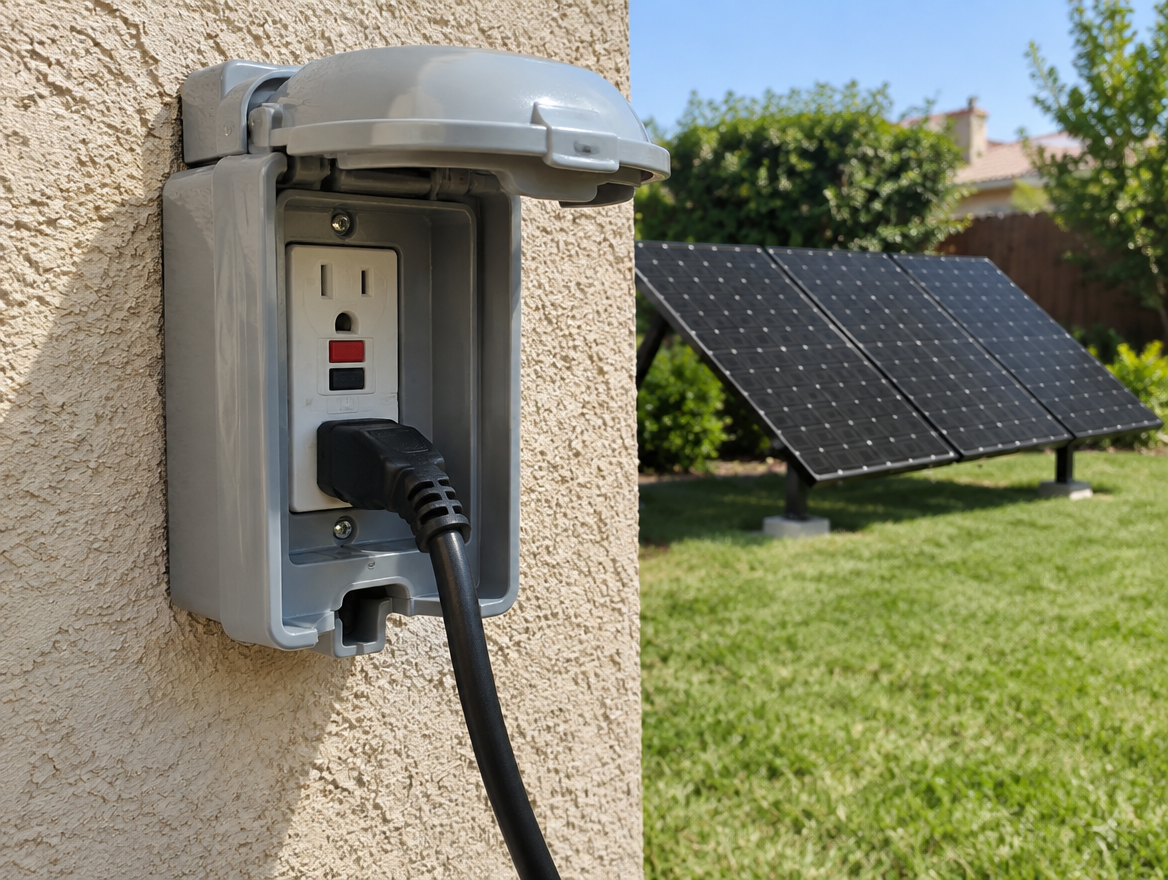
Dedicated solar circuit
A dedicated circuit gives your solar its own outlet, its own wire and its own breaker, with nothing else connected. Power from your panels flows straight back to your electrical panel, where it's shared safely with the rest of your home.
- Full output, safely. Run two microinverters without overloading a shared circuit.
- No guesswork. You don't have to track which appliances share the outlet.
- Right where you need it. A new weatherproof GFCI outlet placed next to your panels.
- Room to grow. Wire and breaker sized for the system you have and the one you're planning.
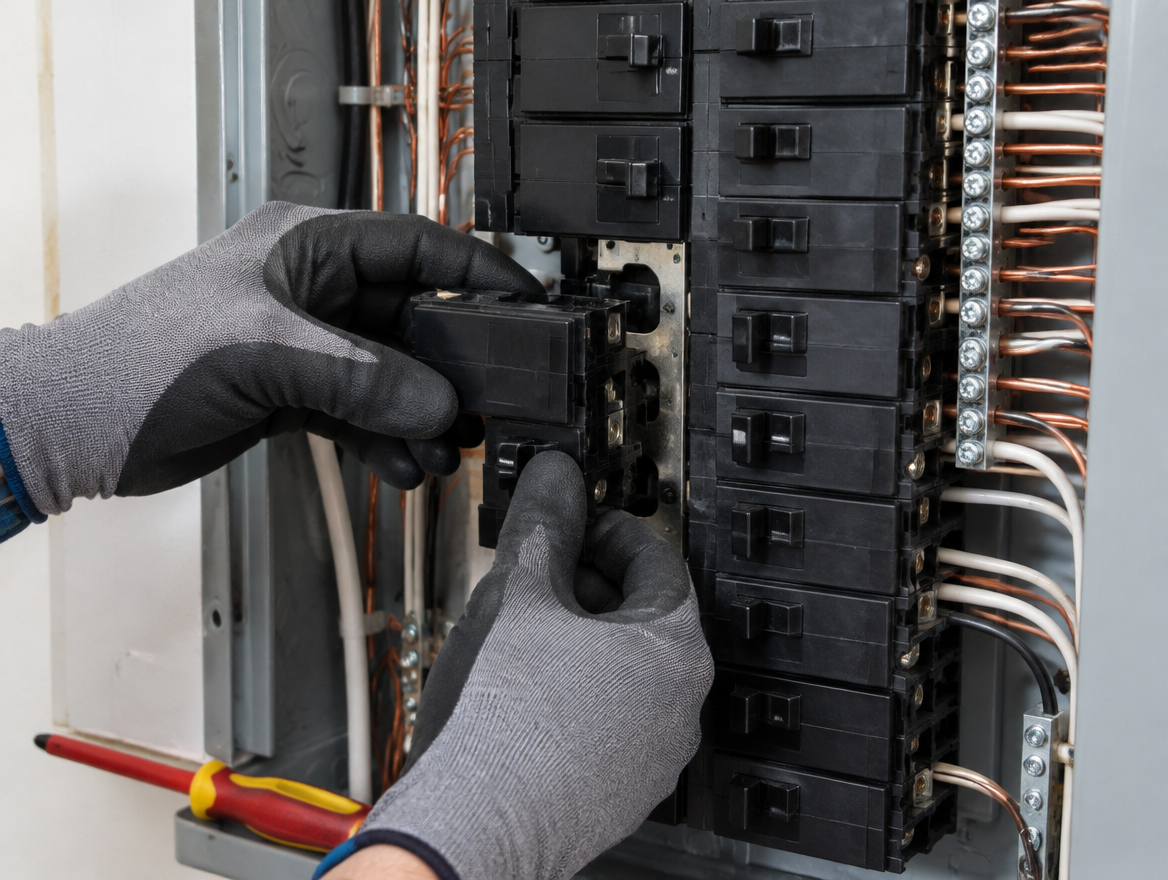
New circuit breaker
Every dedicated circuit needs its own breaker, and adding one means working inside a live electrical panel. It's a job for a licensed electrician.
- Check that your panel and busbar can safely take the added solar power
- Choose the right breaker size and wire gauge for your system
- Put the breaker in the right position in the panel
- Find a solution if your panel is full, such as rearranging circuits or adding a subpanel
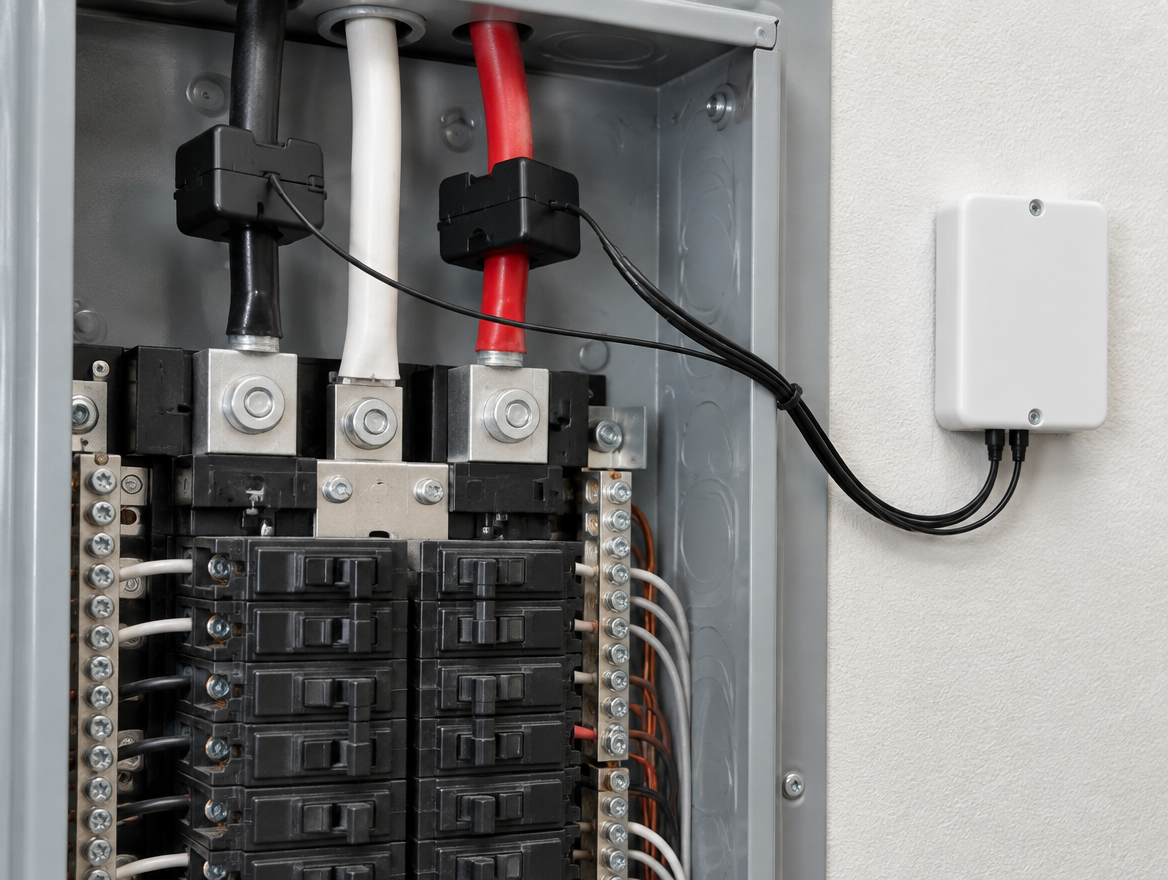
APsystems APmeter installation
The APmeter is what keeps your system zero-export. It measures how much power your home is using and tells your microinverter to throttle down, so nothing gets pushed back onto the grid.
To do that, its current sensors clamp around the main wires inside your electrical panel. Those wires are live and carry a lot of current, so we recommend a professional install.
- Sensors placed correctly so the meter reads your whole home's usage
- Meter connected and tested with your microinverter
- Panel closed up safely and checked when the job is done
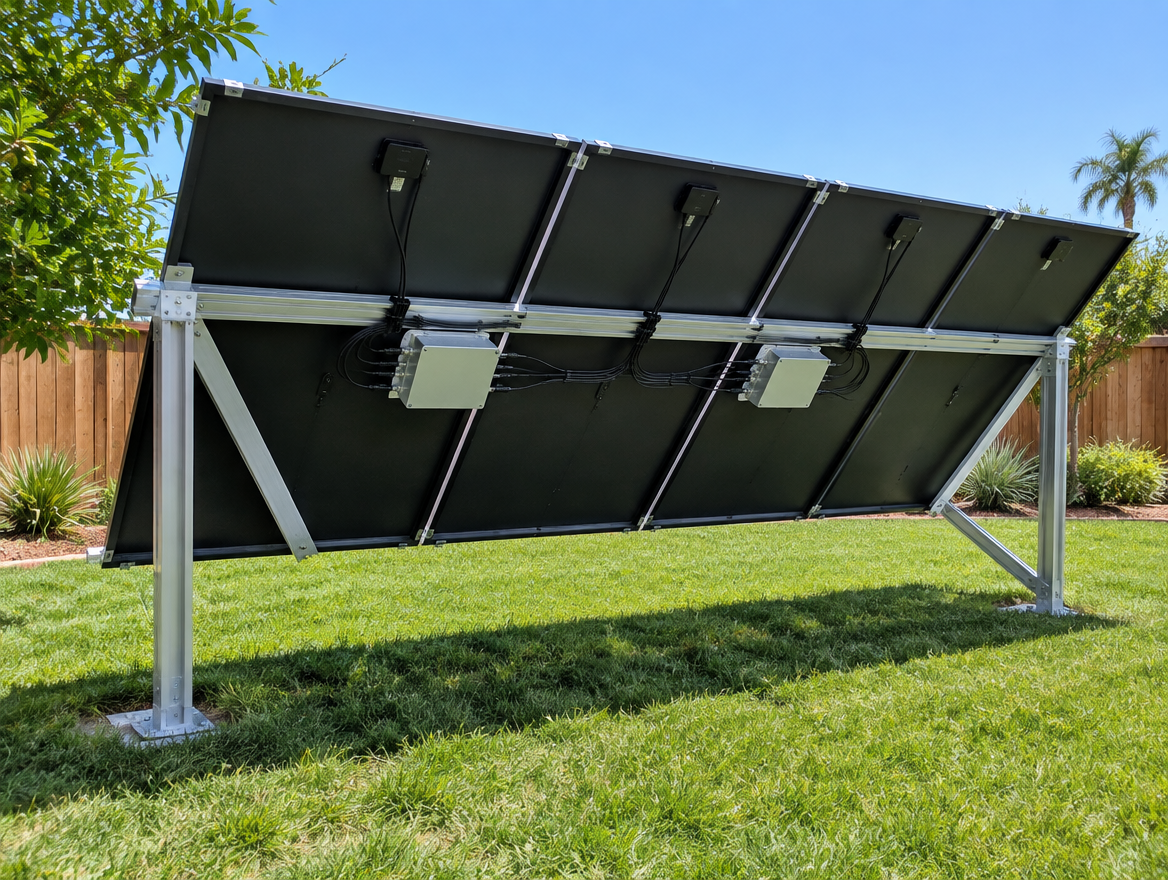
Expanding to a second microinverter
Adding a second EZ1 doubles your potential output to about 1,800 W. That's great for your bill, and it's also the point where your system should have its own dedicated circuit. We can plan the expansion and the electrical work together, so it's done right the first time.
Simple process
How booking works
Tell us about your setup
Fill out the form with your address, the work you need and how many microinverters you have or plan to run.
We review and quote
We'll get back to you to talk through the job, confirm pricing and find a time that works.
Your electrician does the work
A licensed electrician completes the install and handles any permit your city requires for new electrical work.
Questions
Frequently asked questions
Can I just plug in one kit myself?
In most homes, yes. A single EZ1 kit is designed to plug into a standard outdoor outlet. For the safest setup, use an outlet on a circuit that doesn't also run big appliances. If you're unsure what's on that circuit, we can help you check.
Why can't I just plug two microinverters into one outlet?
Two microinverters can feed about 1,800 W into a single circuit. Your breaker only measures power coming from the panel, so if a large appliance runs on that same circuit, the wire can carry more than it's built for without the breaker tripping. A dedicated circuit removes that risk.
Do I need a permit?
Plugging in a kit doesn't involve new wiring. Adding a circuit, breaker or outlet is electrical work, and many cities require a permit for it. Your electrician will take care of any permit your city requires.
What if my electrical panel is full?
That's common. Depending on your panel, an electrician may be able to rearrange circuits, use a compatible space-saving breaker, or add a small subpanel. They'll recommend the safest option for your home.
How much does it cost?
Every home is different: distance from the panel, panel condition and the work needed all affect the price. Send us your details and we'll give you a quote before any work begins.
Do I need an electrician to install the APmeter?
The APmeter's sensors clamp around the main wires inside your electrical panel. Opening a panel means working near live, high-current conductors, so we recommend having an electrician do it.
Book now
Request an electrician
Tell us what you need and we'll get back to you to confirm the details, pricing and a time that works.
Not sure what to pick? Choose "Not sure – help me decide" and describe your setup.