Plug-In Solar Shuts Off in a Blackout. Here's How to Keep Your Lights On.
Plug-in solar is one of the easiest ways to cut your power bill. But there's one thing every owner should know before the next outage: when the grid goes down, your plug-in solar goes down with it. Here's why, and how to build a simple backup plan with a portable power station and a generator input plug.
Why your microinverter shuts off in a blackout
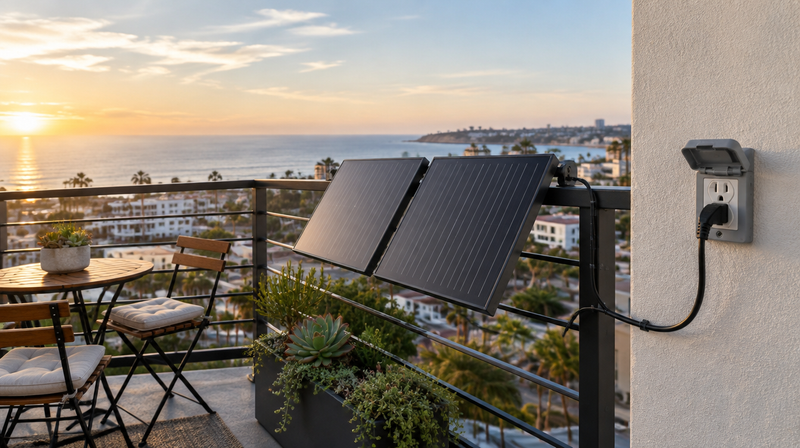
A plug-in microinverter like the APsystems EZ1 is grid-tied. It matches its power to the grid's voltage and frequency, and it's built with anti-islanding protection (a UL 1741 safety requirement). When it senses the grid has gone dead, it shuts off within a fraction of a second.
That's not a flaw. It's a safety feature. If your system kept pushing power into your home's wiring during an outage, that power could flow back out onto the utility lines, where crews working on repairs expect them to be dead. Anti-islanding protects them.
The APmeter zero-export smart meter doesn't change this. It keeps your solar from sending power to the grid while everything is running, but it can't keep the microinverter on when the grid is down.
Bottom line: plug-in solar lowers your bill every sunny day, but on its own it won't keep your lights on in a blackout.

The fix: a portable power station
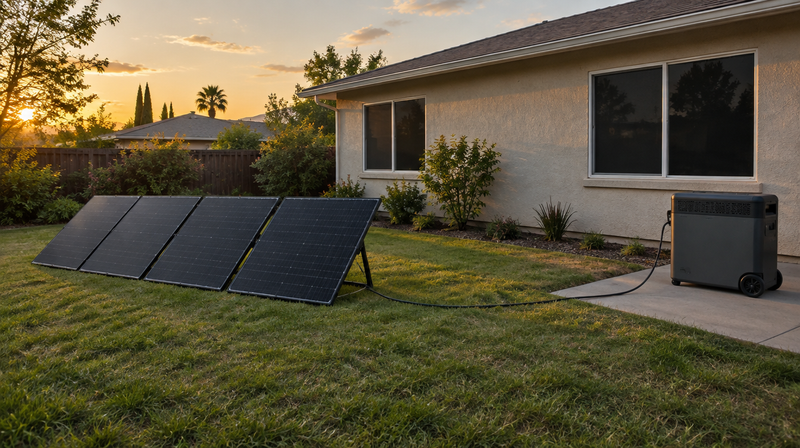
A portable power station is a large rechargeable battery with built-in outlets, often called a "solar generator." It's quiet, has no fumes and can be used indoors. Brands like BLUETTI and EcoFlow make models that store enough energy to run a fridge, lights and Wi-Fi for hours, and some much longer.
Keep it charged with your solar, every day
On a normal day, your microinverter is feeding solar power into your home. Plug your power station into a wall outlet while the sun is out, and you're charging it with power your panels are making at that moment. When the next outage hits, you start with a full battery.
Power your critical loads in an outage
When the power goes out, plug your most important devices straight into the power station. Here's roughly what common essentials draw (check your own devices' labels):
| Device | Typical running watts |
|---|---|
| Wi-Fi router + modem | 15–30 W |
| LED lights (a few rooms) | 30–60 W |
| Phone and laptop charging | 20–90 W |
| CPAP machine | 30–60 W |
| Refrigerator (averaged over time) | 100–200 W, with a short startup surge |
A 2,000 Wh power station running about 300 W of these essentials would last roughly 5–6 hours. Run the fridge in shorter bursts and it stretches much further.

Recharge it from your panels during a blackout
Here's a trick many plug-in solar owners don't know: your panels still make power during an outage. Only the microinverter shuts off. So you can move your panels over to the power station and recharge it during the day, then use it at night.
- Unplug the microinverter from the wall first, so it's fully off.
- Disconnect the panel's MC4 connectors from the microinverter. Never pull DC connectors apart while power is flowing.
- Connect the panels to your power station's solar input, using the adapter cable made for your model (many use XT60, Anderson or MC4 inputs).
- Check the limits first. Your panels' open-circuit voltage (Voc) and wattage must be within your power station's solar input range. Panels wired in series add voltage quickly, so check the numbers on the back of each panel against your power station's specs.
When the grid comes back, reverse the steps and reconnect your panels to the microinverter.

Power whole circuits: generator plug + interlock
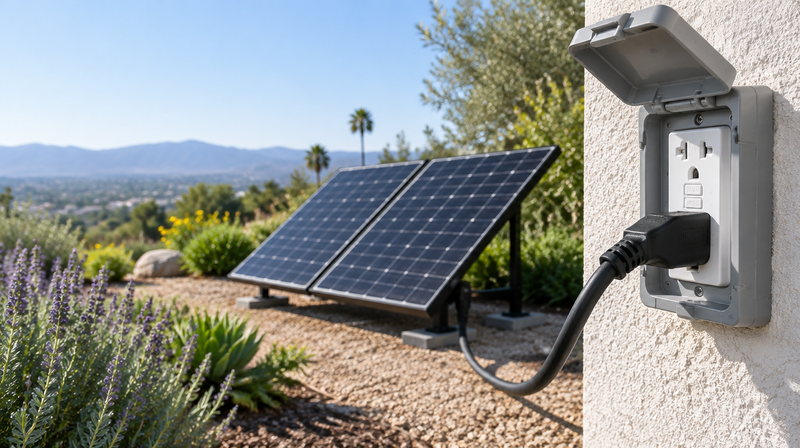
Running extension cords to the fridge works, but it's messy. A better setup is a generator input plug, also called a power inlet box. It's a weatherproof outdoor inlet wired to your electrical panel. In an outage, you run one heavy-duty cord from your power station to the inlet and power the circuits you choose, like the kitchen, the bedrooms, or the furnace fan, right from your breaker panel.
An input plug must always be installed with a generator interlock kit (or a transfer switch). The interlock physically keeps your main breaker off while backup power is on, so your house is completely cut off from the grid. This is required by code, and it protects line workers. That's why we only sell our generator input plug together with the matching interlock kit for your panel.
Never back-feed your home through a regular outlet with a double-ended ("male-to-male") cord. It's illegal, it can electrocute utility workers and anyone who touches the other end, and it can start fires. A properly installed inlet box and interlock is the safe way to do this.
Which inlet do you need?
- L14-30 (4-prong, 120/240 V): for larger power stations and generators with a 30 A L14-30 output. It can power both sides of your panel.
- L5-30 (3-prong, 120 V): for power stations with a 120 V 30 A output (L5-30, or TT-30 with an adapter cord).
Look at the biggest AC outlet on your power station and match the inlet to it. Not every power station has a 30 A output, so check yours before you buy. When you order, you'll also pick your electrical panel's brand (it's on the label inside the panel door) so we can match the right interlock kit. Not sure? Choose "Not sure" and we'll confirm it with you.
A licensed electrician should install the inlet box and interlock kit. Add an Electrician Visit to your order and we'll size it to your power station and your panel.
Shop the Generator Input Plug + Interlock KitBook an electrician

Your simple blackout plan
- Plug-in solar lowers your bill every sunny day.
- A portable power station stays charged with your own solar power.
- A generator input plug + interlock kit lets it power the circuits you need most.
- Your panels can recharge the power station during a long outage.
We'll be adding BLUETTI and EcoFlow portable power stations to our Portable Power Stations collection soon. Have questions about the right size for your home? Get in touch. We're happy to help you plan it.
Start saving with plug-in solar
Zero-export kits, local delivery and installation, and a team that knows plug-in solar inside and out.